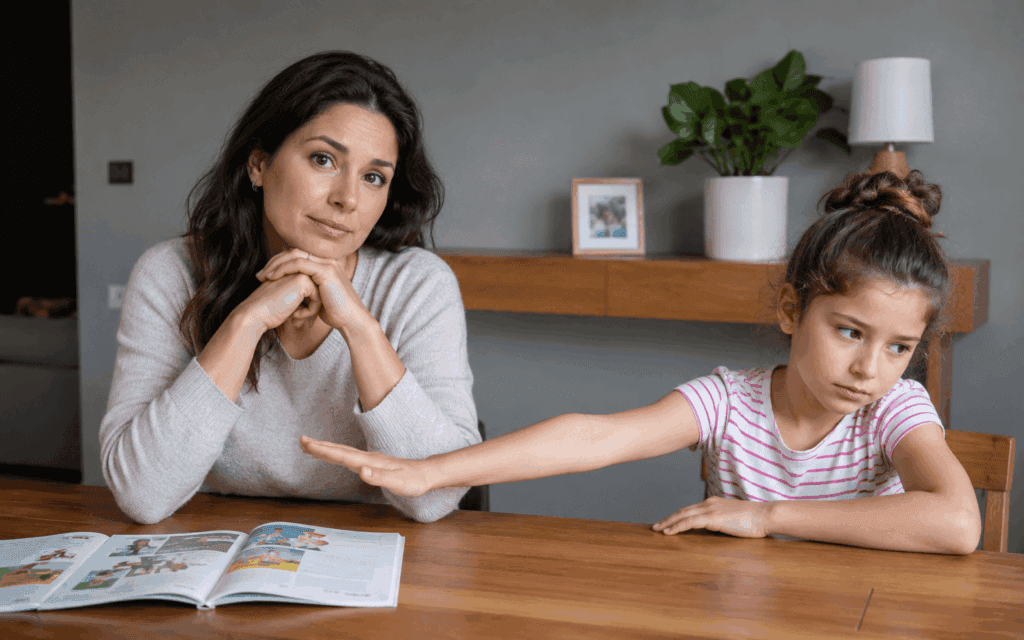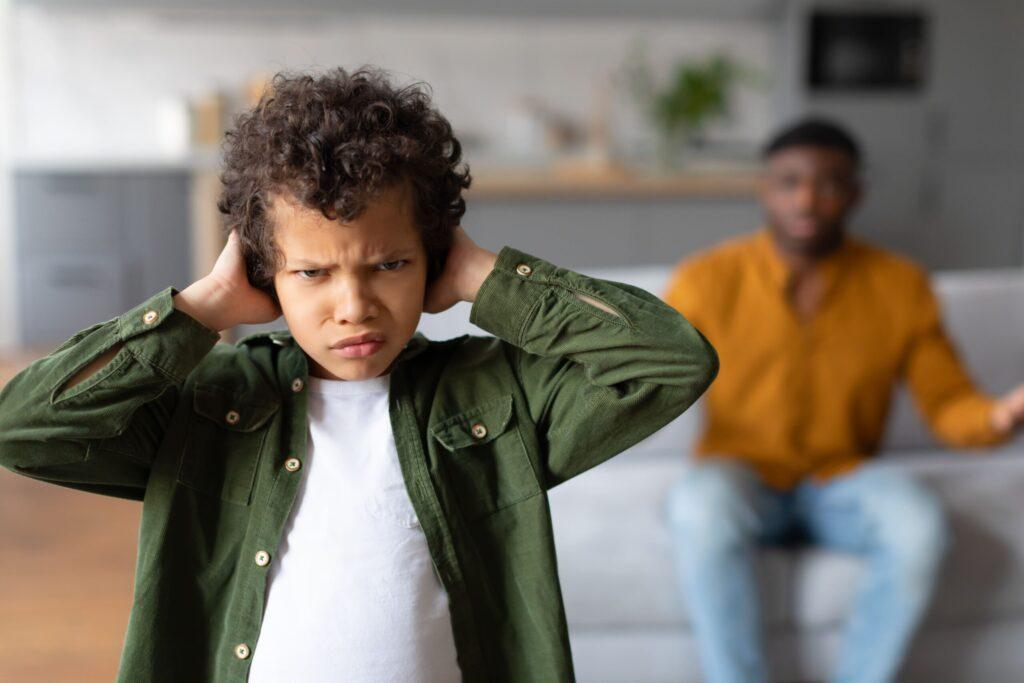


Your child starts homework calmly… and then everything falls apart after one small mistake. Suddenly, there are tears, frustration, or a complete shutdown. If this feels familiar, you’re seeing something many parents struggle to understand, and it’s often not about behavior or effort. In many cases, it’s about emotional regulation in children.
What makes it especially confusing is that your child can seem perfectly capable one moment, and completely overwhelmed the next. This is where it helps to look more closely at what’s really happening in those moments, and how you can support your child when things start to feel too much for them.
It is a skill that develops over time, and some children need more support with it than others.1,2 This matters because emotional regulation is not separate from learning. When frustration rises, thinking often gets harder, too. Once you see what emotional regulation really involves, it becomes easier to recognize how it shows up in everyday situations.
What Emotional Regulation in Children Means
Emotional regulation in children is the ability to manage emotions well enough to stay engaged, recover from frustration, and keep going when something feels difficult. It doesn’t mean staying calm all the time, but being able to regain control and continue functioning.
Children use emotional regulation when they:
- make a mistake and try again
- stop an activity they were enjoying
- handle a transition without melting down
- stay with a frustrating task
- calm themselves enough to think clearly
Like attention and working memory, emotional regulation is part of the set of skills children rely on every day at school and at home. Children are not born with these skills fully developed. They build them gradually through development, relationships, routines, and practice.1,2
If you want a broader look at the skills that support planning, focus, and follow-through, read Executive Functioning Skills for Kids.
Because of that, emotional regulation challenges do not look the same in every child.
What Emotional Regulation Looks Like in Children
Emotional regulation doesn’t break down the same way in every child.
For some children, the reaction is immediate. For others, it builds gradually across the day, showing up as growing irritation, frustration during homework, avoidance when work feels too hard, or a “fine one minute, overwhelmed the next” pattern.
Parents often notice emotional regulation struggles in moments like these:
- homework becomes a battle after one mistake
- transitions lead to outsized reactions
- the child seems capable when calm, but disorganized under pressure
- a timed task causes panic or shutdown
- small setbacks trigger a much bigger response than expected
That is one reason emotional regulation can be so confusing. If this pattern shows up often across homework, routines, or transitions, it is usually worth looking more closely.
A child may understand the material and still struggle to access it once emotions take over. Once that starts happening around schoolwork, regulation becomes more than a behavior issue. It starts to affect learning directly.
If that pattern sounds familiar, read Why Is My Child Struggling in School? for a broader look at what can make learning feel harder than it should.
Why Emotional Regulation Affects Learning
This is often the moment that confuses parents the most. A child can understand the material, and still not be able to show it once frustration takes over.
Children who can manage frustration and recover more effectively tend to do better in the classroom, stay more engaged in learning, and persist longer when work is difficult. Research shows that emotional regulation is linked to academic success, classroom productivity, and school readiness, even after accounting for differences in intelligence.3,4
That matters because many school struggles are not just about what a child knows. They are also about whether the child can stay calm enough to use what they know.
A child may:
- know the answer but freeze during the test
- understand the assignment, but shut down once it feels too hard
- do well one day and struggle the next, depending on stress and overload
It also helps explain why some children struggle more than others, even when they are bright and trying.
Why Some Children Struggle More With Emotional Regulation
Children do not all develop emotional regulation at the same pace.
Some children are naturally more reactive. Some are more sensitive to frustration, transitions, or uncertainty. Some have a harder time holding on to self-control when attention, working memory, and stress are all being taxed at once.
Development also varies from child to child. Research shows that emotion regulation strategies shift across early childhood, and flexibility continues to develop as children grow.1,2
Temperament matters. Environment matters. Executive function matters too.
That means emotional regulation struggles are not simply a sign of “bad behavior.” They often reflect a skill that is still developing, and a child who may need more support to handle challenging moments successfully.5,6 A big part of that struggle is what happens to thinking once frustration takes over.
Why Frustration Makes Thinking Harder
When frustration rises, thinking often gets harder.
Stress affects the brain systems involved in attention, working memory, and self-control. When a child is upset, the part of the brain responsible for flexible thinking and regulation becomes less effective. That can make the child seem forgetful, disorganized, impulsive, or unable to continue, even when they know the material.7
For a closer look at one of those bottlenecks, read How to Improve Working Memory in Children.
This helps explain why a child may:
- do well in a calm setting but fall apart under pressure
- “forget everything” once emotions spike
- seems inconsistent from one day to the next
In other words, emotional regulation is not just about calming down. It affects whether a child can keep thinking when something feels hard.
This is why what you say in these moments matters. When a child feels understood first, it becomes easier for them to access thinking again. Once parents see that connection more clearly, the support they offer at home often becomes more targeted and more effective.
If homework often turns into conflict once frustration rises, read How to Motivate Kids to Study.
This works because when emotions take over, thinking shuts down. Regulation has to come before problem-solving.
How to Support Emotional Regulation at Home
The good news is that emotional regulation can be supported.
You do not need a perfect system. A few consistent supports can make a meaningful difference. What you say in these moments also plays a key role, especially when your child is already overwhelmed. When emotions are high, simple, predictable language can help your child feel safer and regain control.
Help your child regulate before you problem-solve
If your child is already overwhelmed, reasoning usually comes too late. Start with calm, then return to the task.
Make the next step smaller
A child in distress often cannot handle the whole task. Shrinking the demand can make recovery more possible.
Use calm, predictable language
A steady parent response helps children borrow calm when they cannot generate it on their own. For example, you might say:
- “I can see this is really frustrating right now.”
- “Let’s slow it down. You don’t have to do everything at once.”
- “Show me where it got hard.”
These kinds of responses help your child feel understood first, which makes it easier for them to re-engage.
Phrases like “calm down” or “it’s easy” often have the opposite effect, because they increase pressure instead of reducing it.
Prepare for transitions
Warnings, routines, and simple expectations can reduce stress before it builds.
Practice outside stressful moments
Children build regulation more effectively in lower-pressure situations, not only in the middle of a meltdown.
Notice patterns
What triggers the strongest reactions?
- homework
- writing
- multi-step tasks
- sudden changes
- fatigue
These patterns often tell you more than a result ever will.
Support recovery, not perfection
The goal is not to eliminate strong emotions, but to help your child recover more effectively over time.
Take 7-year-old Leo. He’s happily playing at home, but when it’s time to stop and start homework, everything shifts quickly. He argues, ignores instructions, or says he won’t do it at all. What looks like defiance often starts with the difficulty of switching from one activity to another. In that moment, instead of giving a direct command, the parent might slow things down and say:
“I know it’s hard to stop when you’re enjoying something. Let’s take it one step at a time.”
When his parent slows the moment down, gives one clear next step, and avoids rushing him, Leo is much more able to transition and stay with the task. Instead of escalating the situation, this kind of language helps him feel supported enough to shift gears.
Research-backed approaches like scaffolding, co-regulation, and predictable routines can help children gradually strengthen these skills.5,6,8 Some children improve steadily with this kind of support. Others may need more help if the same pattern keeps interfering across home and school.
When Your Child May Need More Support
Sometimes emotional regulation improves with time and support. Sometimes it continues to interfere with daily life in a more significant way.
It may help to seek additional support if your child:
- has frequent intense meltdowns beyond what seems typical for their age
- struggles to recover from frustration across both home and school
- avoids tasks regularly because emotions escalate so quickly
- seems increasingly anxious, shut down, or reactive over time
Support might include working with teachers, adjusting routines, or speaking with a qualified professional.
This is not about labeling your child. It is about understanding what kind of support may help them most. For many families, that becomes easier once emotional regulation is seen as one part of a broader learning pattern rather than an isolated problem.
Understanding the Bigger Picture
Emotional regulation is one part of a broader learning pattern.
A child’s ability to stay engaged with learning also depends on things like:
- attention
- working memory
- task initiation
- cognitive load
- how they respond to challenge
Kidaro (kidaro.app) helps parents understand how these pieces fit together in a child’s Learning Profile.
It is not a diagnosis.
It is not IQ testing.
It is not labeling.
It is a structured way to understand patterns, reduce guesswork, and support your child with more clarity.
If emotional ups and downs are making learning harder, the next step may be understanding how emotional regulation fits into your child’s broader Learning Profile.

Stop guessing what’s actually getting in the way.
FAQs
Sources
- Ratcliff, K.A., Vazquez, L.C., Lunkenheimer, E.S., & Cole, P.M. (2021). Longitudinal Changes in Young Children’s Strategy Use for Emotion Regulation. Developmental Psychology.
- Haag, A.C., et al. (2024). Emotion Regulation Flexibility in Adolescents: A Systematic Review. Frontiers in Psychology.
- Adynski, H., Propper, C., Beeber, L., et al. (2024). The Role of Emotional Regulation on Early Child School Adjustment Outcomes. Archives of Psychiatric Nursing.
- Lin, S.C., et al. (2024). Child Emotion Regulation Mediates the Association Between Family Factors and Internalizing Symptoms in Children and Adolescents: A Meta-Analysis. Journal of Child Psychology and Psychiatry.
- Paley, B., & Hajal, N.J. (2022). Conceptualizing Emotion Regulation and Coregulation as Family-Level Phenomena. Clinical Child and Family Psychology Review.
- Zimmer-Gembeck, M.J., Rudolph, J., Kerin, J., & Bohadana-Brown, G. (2022). Parent Emotional Regulation: A Meta-Analytic Review of Its Association With Parenting and Child Adjustment. International Journal of Behavioral Development.
- Almarzouki, A.F. (2024). Stress, Working Memory, and Academic Performance. Stress: The International Journal on the Biology of Stress.
- Child Mind Institute (Reviewed Dec 19, 2025). How Can We Help Kids With Self-Regulation?
More for Parents:
- How Do Children Learn Best? A Parent Guide to What Actually Helps
- Adaptive Learning for Kids: What It Is and What Real Personalization Requires
- Working Memory Activities for Kids
- What Is My Child’s Learning Style?
- Learning Styles for Kids: What VARK Gets Right and What Actually Helps
- How to Help a Child Who Procrastinates
- Why Do Children Hate School
- Spelling Strategies for Kids
- Homework Strategies
- Executive Functioning Strategies
- What Is Adaptive Learning for Kids
- How Does a Child Learn Best
- My Son Is Smart but Failing

Written by
Kidaro Team