
Your child sits down to read, and within minutes they are fidgeting, guessing at words, or pushing the book away. Maybe they say they hate reading. Maybe they get through a page so slowly that the meaning disappears by the end of the sentence. Maybe they can read the words but cannot tell you what happened.¹²
That is frustrating to watch, especially when you are already trying.
What usually helps is not adding more minutes or pushing harder. It is giving the right kind of support in the moment your child keeps getting stuck. Sometimes that means making reading feel more doable. Sometimes it means helping with hard words more clearly. Sometimes it means choosing a book that is a better fit.
This guide is about what parents can actually do at home.
If you are still trying to figure out why reading feels hard in the first place, read our guide on Why Is My Child Struggling With Reading.
Make Reading Feel Doable
A lot of generic reading advice is too vague to be useful. “Read more” is not wrong, but it is incomplete.
What tends to help most is engaged support, reading with your child in ways that build skill, lower pressure, and make it easier for them to stay with the text. Reading that feels tense usually leads to avoidance. Reading that feels more manageable gives a child a better chance to keep trying.²
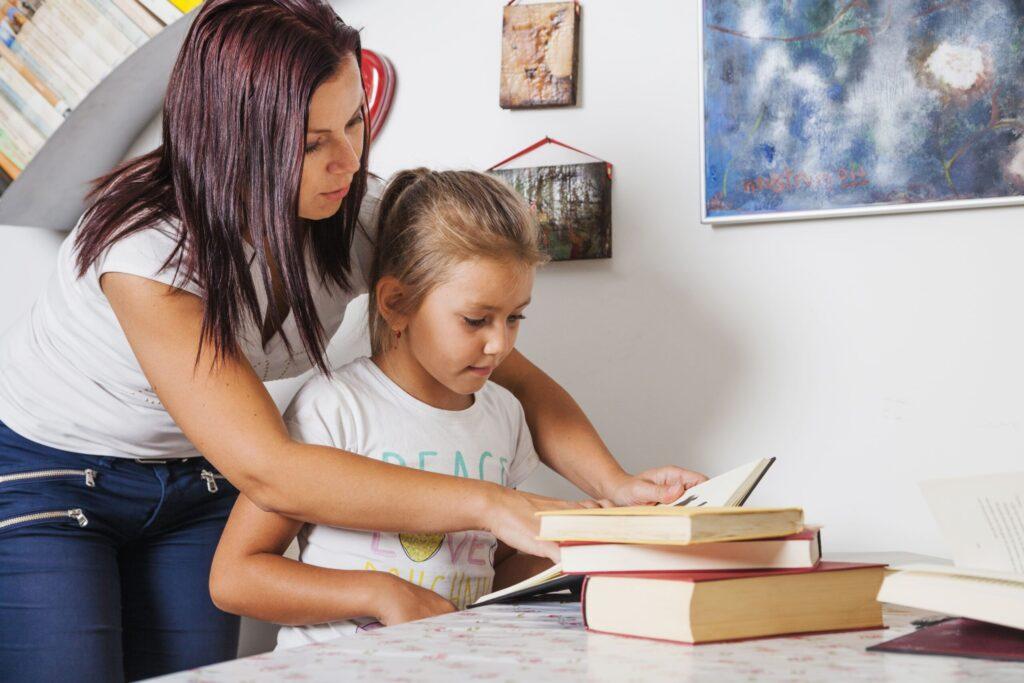
One simple format is alternating pages. You read one, they read one. The child is not left alone with an entire page while you wait for mistakes. If a page is clearly too hard, you take it naturally and move on.
For some children, it also helps to change the setting. A comic book on a beanbag chair can feel very different from a school reader at the kitchen table. The point is not to trick them. It is to lower the pressure around the task.
If your child is already tired or resistant, keep the session short. Five calm minutes is better than twenty tense ones. A short session that ends well is much easier to restart the next day.¹
If they say, “I hate reading,” do not argue with it right away. Try something like, “Reading feels really hard right now,” or, “Is it this book, or reading itself?” That keeps the door open instead of turning the moment into a power struggle.
If frustration starts rising, stop early. That is not giving up. It is protecting the next session. Ending with, “Let’s stop here. You did good work,” is more useful than dragging things out until everyone is irritated.
It also helps to name specific wins when they happen. “You figured that word out yourself,” lands better than general praise. So does, “You kept going even when that part was hard.”
Help With Hard Words Without Taking Over
When a child gets stuck on a word, it is easy to jump in too fast. It is also common to say something vague like “sound it out,” which is often not enough to help.
A better rhythm is: pause, prompt, then move on.³
If that sounds familiar, our guide on Why Is My Child Struggling With Reading explains some of the most common patterns behind it.
First, give them a few seconds. The pause matters. If you step in immediately every time, the child learns to wait for help instead of trying.
If they are still stuck, use a prompt that tells them what to do next:
- Can you break it into smaller pieces?
- What sounds do you know in this word?
- Cover up the ending and read the first part first.
- What sound does that letter make?
- Try reading the whole sentence again and see if that helps.
You can also say the sounds separately and let the child blend them into the word.
What usually helps less is prompting them to guess. “Look at the picture,” “take a guess,” or “skip it” may get them through the page, but they do not build the decoding habit that stronger reading depends on.⁴
After a couple of honest attempts, just give them the word and keep going. You do not want one hard word to take over the whole reading session.
Read Together in a Way That Helps
Reading together can build real skill when it is done in a way that supports the child instead of putting them on the spot.
One strong option is paired reading. You and your child read the same text aloud together. When they feel ready, they keep going alone. If they stumble, you quietly join back in. This keeps the reading moving and reduces the feeling of performing by themselves.⁵
Echo reading can also help, especially if your child reads in a choppy way. You read one sentence first with natural pacing and expression, then they read the same sentence back. It gives them a model to follow.⁶
Rereading familiar books matters too. It is easy to think rereading is not “real” progress, but it is one of the clearest ways to build fluency. When a child already knows the story, they can spend less energy figuring everything out and more energy reading smoothly.
Use Read-Alouds and Audiobooks Strategically
Reading aloud still helps, even when a child is old enough to read on their own.
It gives them access to stories, vocabulary, and ideas that may be above what they can comfortably handle in print. It also keeps books from becoming something they only associate with effort.⁷
Audiobooks can help in a similar way. A child can stay connected to stories and meaning even while their print skills are still catching up. For some kids, listening while following along in the physical book works especially well. It lowers the decoding burden without cutting them off from the page.⁸
You do not need to turn this into a lesson afterward. One real question is enough. “What did you think was going to happen?” or “Did that part surprise you?” works better than a formal comprehension check.
Talk About the Story, Not Just the Words
Some children can get through the words on the page and still not hold onto the meaning. When that happens, it helps to make the conversation about the story feel lighter and more natural.⁹
Before reading, you can ask, “What do you think this will be about?” During reading, try, “What do you think happens next?” Afterward, something like, “What was the strangest part?” or, “Why do you think they did that?” often opens more than “What happened?”
A short retell can help too. Ask your child to tell you the beginning, middle, and end of what they just read. It does not need to be perfect. The point is helping them organize what they understood.
If they read something on their own, another good move is to let them explain it to you like you have never read it before. That shift helps some children engage more than direct questioning does.
Choose Books Your Child Can Succeed With
A lot of reading resistance is really a bad-fit problem. The book is too hard, too long, or too uninteresting for where the child is right now.
A quick way to check is the Five-Finger Rule. Open to a page and have your child read it. Count the words they do not know.¹⁰
- 0–1 unknown words: probably too easy
- 2–3 unknown words: about right
- 4 unknown words: better to read together
- 5+ unknown words: too hard for independent reading
Then keep the actual book choices simple.
- If your child guesses at words a lot, try decodable books. These give them words they can realistically work through instead of forcing guesswork.
- If full novels overwhelm them, try graphic novels or comics. The visual support helps them stay with the story and makes finishing a book feel possible.¹¹
- If fiction loses them, try nonfiction about something they already care about. Sports, animals, science, gaming, vehicles — it all counts.
- If they badly want a book that is too hard, make it a read-aloud. They still get access to the story, and you avoid turning that interest into frustration.
That is enough. You do not need the perfect book system. You need books your child can actually stay with.
Build Reading Into Everyday Life
Reading gets easier to tolerate when it stops feeling like something that only happens during “reading time.”
Menus, recipes, game instructions, shopping lists, captions, and sports coverage all count. A child reading the next step in a recipe or the rule for a board game is still reading for a real purpose.
That is part of why these moments work. The reading is doing something. It is not just practice for practice’s sake.
A few easy examples:
- reading a menu and ordering from it
- reading the next recipe step while you cook
- reading rules for a new game
- reading sports stats, scores, or favorite-topic articles
- leaving captions on during TV
The point is not to turn daily life into a hidden lesson. It is to let reading show up in places where it feels more useful and less loaded.
When Your Child Avoids Reading
Reading avoidance usually has a reason behind it. The child may be protecting themselves from something that feels hard, embarrassing, or exhausting.¹²
Sometimes the books are too hard. Sometimes they have been corrected so often that reading now feels like a performance. Sometimes they are simply tired by the time reading happens.
What usually makes avoidance worse is more pressure. Forcing a specific book, correcting every mistake, or turning reading into a condition for getting something they want can make the whole thing feel even heavier.¹²
What helps more is lowering the stakes. Let them choose the format. Start with something they can actually finish. Read with them instead of making them read to you. Stop before they hit the breaking point.¹²
If avoidance keeps happening, the most useful question is not, “How do I make them read?” It is, “What does reading keep asking them to do that still feels too hard?”
That is usually where the real friction is.
If reading quickly turns into frustration, shutdown, or dread, it may also help to read our guide on Emotional Regulation in Children.
When It Helps to Get More Support
Home support matters, but some reading struggles need more than what a parent can reasonably do on their own.
It may be time to talk to your child’s teacher if you keep seeing patterns like these:¹³
- guessing at words instead of sounding them out
- common words not sticking even after a lot of exposure
- very slow, word-by-word reading, even with familiar text
- understanding much more when listening than when reading
- repeated tears, refusal, or distress around reading
- reading that has stayed meaningfully behind for a long stretch
These are not diagnoses. They are signs that it makes sense to ask more questions.
A useful one is: “Can you tell me what reading level my child is working at, and whether that is where you would expect them to be right now?” Another good question is: “What is the school doing for reading support, and how can I reinforce that at home?”¹³
Getting more help is not giving up on your child. It is often the thing that lets home support become more effective.
And if reading seems to be only one part of a bigger school pattern, it may help to read our guide on Why Is My Child Struggling in School.
Understand Your Child’s Learning Profile With Kidaro
Sometimes parents try a lot of the right things and still feel like the same reading problems keep coming back in different forms. One week it looks like hard words. The next week it looks like avoidance. Then it seems like comprehension. It can start to feel messy.
That is often because reading is not happening in isolation. Attention, working memory, frustration tolerance, and processing style can all shape what reading support works best.¹⁴
Kidaro is designed to help parents understand how their child learns in a more specific, non-clinical way. It is not about labeling your child. It is about giving you a clearer picture of the patterns behind the struggle so support at home can be more targeted and school conversations can be more useful.

Stop guessing what’s actually getting in the way.
FAQs
Sources
- Stanford University, 2024 — short reading support sessions can still be effective.
- Annals of Dyslexia / PMC, 2024 — reading anxiety is linked to poorer fluency and comprehension.
- Five from Five, 2025 — Pause, Prompt, Praise home reading guidance.
- Shanahan on Literacy, 2021 — guessing from pictures/context is weaker than decoding-based prompting.
- University of Birmingham / Education Endowment Foundation, 2024 — paired reading improved reading progress in a large trial.
- Decoda Literacy Solutions, 2022 — echo reading supports fluency and expression.
- ASCD, 2022 — read-alouds help with vocabulary, comprehension, and access to more complex language.
- PMC / NIH, 2026 — audiobook + print support helped vocabulary development in struggling readers.
- Education Week, 2024 — fluency is closely tied to comprehension.
- Scholastic, 2024 — Five-Finger Rule as a commonly used guideline.
- International Journal of Social Science, Humanities and Management Research, 2024 — graphic novels can support reluctant readers.
- Education Week, 2022 — shame and embarrassment can fuel reading avoidance.
- HealthyChildren.org / American Academy of Pediatrics, 2022 — reading warning signs parents should take seriously.
- PMC / NIH, 2022 — reading struggles can involve broader factors like working memory and processing.
More for Parents:
- How Do Children Learn Best
- How to Improve Working Memory in Children
- How to Motivate Kids to Study
- Executive Functioning Skills for Kids
- Why Is My Child Struggling With Math
- How to Help My Child With Math
- What Is the Area Model in Math
- How to Deal With Procrastination in Kids
- Kids Not Liking School
- Improve Your Child’s Spelling
- Homework Routine for Kids
- Executive Function in Kids
- Adaptive Learning Explained
- Best Ways for Kids to Learn
- When a Bright Child Struggles
- What Age Should a Child Read Fluently

Written by
Kidaro Team